Article
Beneath the Surface: Colin Beckinsale and the Team Behind the Ice
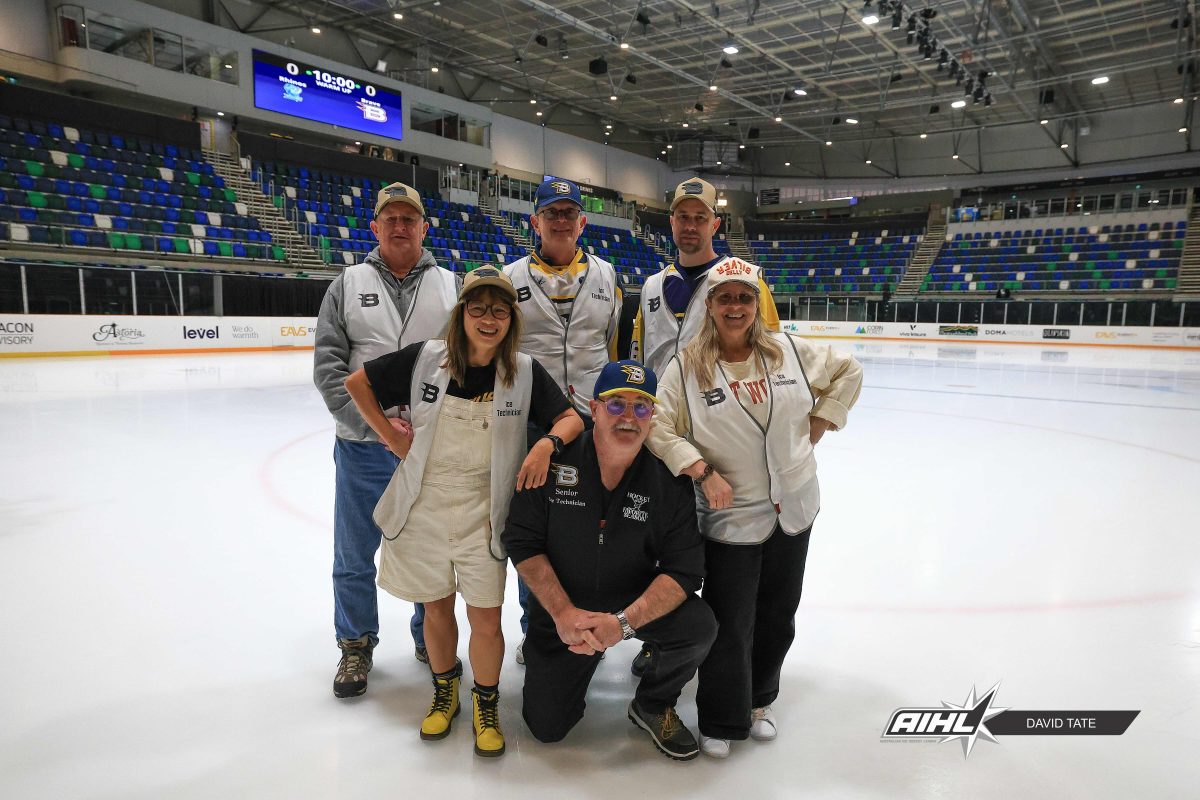
Long before the Canberra Brave step onto the ice, and well after the final player has left it, Colin Beckinsale and the Ice Tech team are still at work.
Their week revolves around preparing, repairing and protecting the playing surface at the AIS Arena. The crew are among the first to arrive, and the last to leave on game day, completing another cut and flood to remove the scars left by three periods of hockey. When they return for training, the process begins again.
Edges are cleared. Raised sections are chipped away. Ice built up around the boards is removed. A dry cut takes out deeper skate marks before fresh water is laid across the surface.
Then, once the players finish training, the team repairs whatever has been left behind.
That could include filling holes drilled into the ice during specialised training drills or packing snow into chips beside the boards where the rink has flexed under the force of a hit.
“You can’t just fill a random hole with water because it freezes as a clear hole,” Colin explained.
“You actually fill it with snow. The snow helps it bond and stops it from chipping out.”
It is detailed, technical work, but the aim is relatively simple: provide the Brave with a hard, smooth and fast surface every time they step onto the rink.
Preparing for the Show
For Colin, the appearance of the ice is also an important part of the experience the Brave are building at the AIS Arena.
“The more we can make it look like the NHL, the better,” he said.
The team strives for a mirror-like finish before every game, even though they know the players will immediately skate across it, stop sharply, battle along the boards and carve it apart.
“If it’s looking brilliant and they’re destroying it, then they’re doing it fast,” Colin said.
“That’s what we aim for. We want it to play hard and fast.”
One of his favourite moments comes shortly before warm-ups, when a puck is placed onto the freshly prepared surface.
“I like it when they throw a puck on the ice and it goes all the way across,” he said.
“When it just slides across the ice, I’m really happy.”
Temperature plays a major role in achieving that result.
On game days, the chillers are set to allow the ice to harden ahead of puck drop, counteracting the heat generated by thousands of people inside the arena. The crowd may not notice a small change in surface temperature, but the players, officials and Ice Tech crew certainly do.
This season, the team has worked to create a more consistent surface regardless of which crew members are completing each task.
“No ice is ever perfect,” Colin said.
“But what we’ve tried really hard to do this year is come up with a way of doing it so it doesn’t matter which member of the team is doing it. The ice is the same.”
A Race Against the Clock
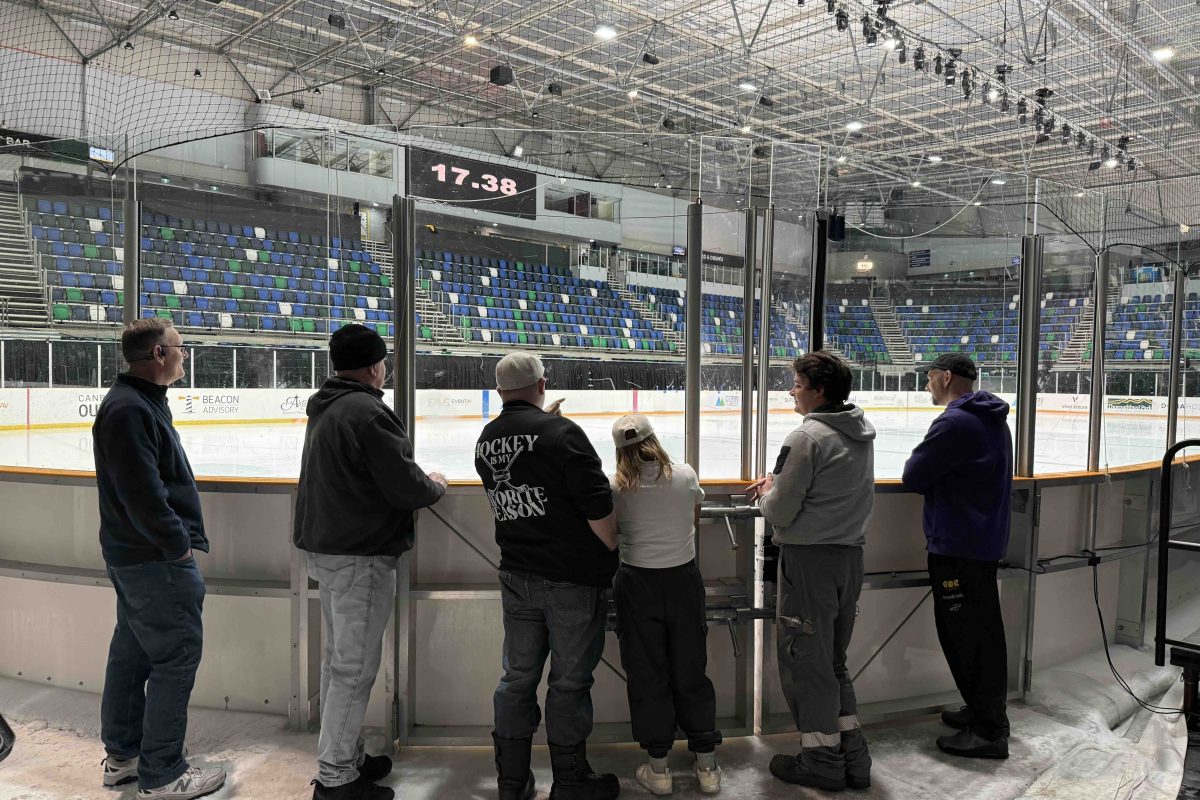
Game day can begin up to six hours before puck drop, and sometimes even earlier when other groups are using the rink.
On particularly busy Sundays, Colin can begin at 8am and remain at the arena until the evening, a working day that can stretch to 13 hours.
Before the doors open, the team completes the same painstaking process of edging, chipping, cutting and flooding. Once the game begins, however, the pressure increases.
At the AIS Arena, the ice is resurfaced following warm-ups before the national anthem, player introductions and puck drop. It has become part of the Brave’s game-day show, but it gives the Ice Tech team a strict window in which to work.
“We have to get around in 12 minutes exactly,” Colin said.
“We have to get that ice prepared so they can come out, do the grand entrance and do the show as the show.”
During the game, the crew is rarely able to simply stand back and watch.
They are monitoring the surface, checking equipment, watching water levels and preparing the resurfacing machine for the next break. They also remain alert to anything happening around the rink, from damage caused by players hitting the glass to spectators resting their feet against the barriers.
“The clock is counting down for the play, but it’s also counting down for when you start business,” Colin said.
Since taking on the role, he estimates he has not watched a complete Brave game from inside the arena.
“When you volunteer, it’s role first and game second,” he said.
Learning on the Job
Colin’s path into the role began when the Brave moved to the AIS Arena and needed someone willing to operate the ice resurfacing machine.
With experience driving buses, trucks and heavy vehicles, he was asked whether he would be prepared to give it a try.
After two days of training, he was placed in the driver’s seat.
The team’s first season at the arena became a steep learning curve. The rink, equipment and ice behaved differently each week, forcing Colin and the crew to adapt quickly.
Since then, he has continued developing his knowledge both in Canberra and overseas.
During a trip to Canada, Colin spent a week working alongside experienced ice technicians at a high school hockey program with two Olympic-sized rinks. He also had the opportunity to observe preparations at Scotiabank Arena as the venue transitioned from a Toronto Maple Leafs preseason game to a Peter Frampton concert, and then back to hockey again.
The experience reinforced one of the most important lessons he has learned.
“No ice is perfect,” he said.
“Something is always going to happen.”
The Brave invested in Colin’s development, and he felt a responsibility to bring that knowledge back and share it.
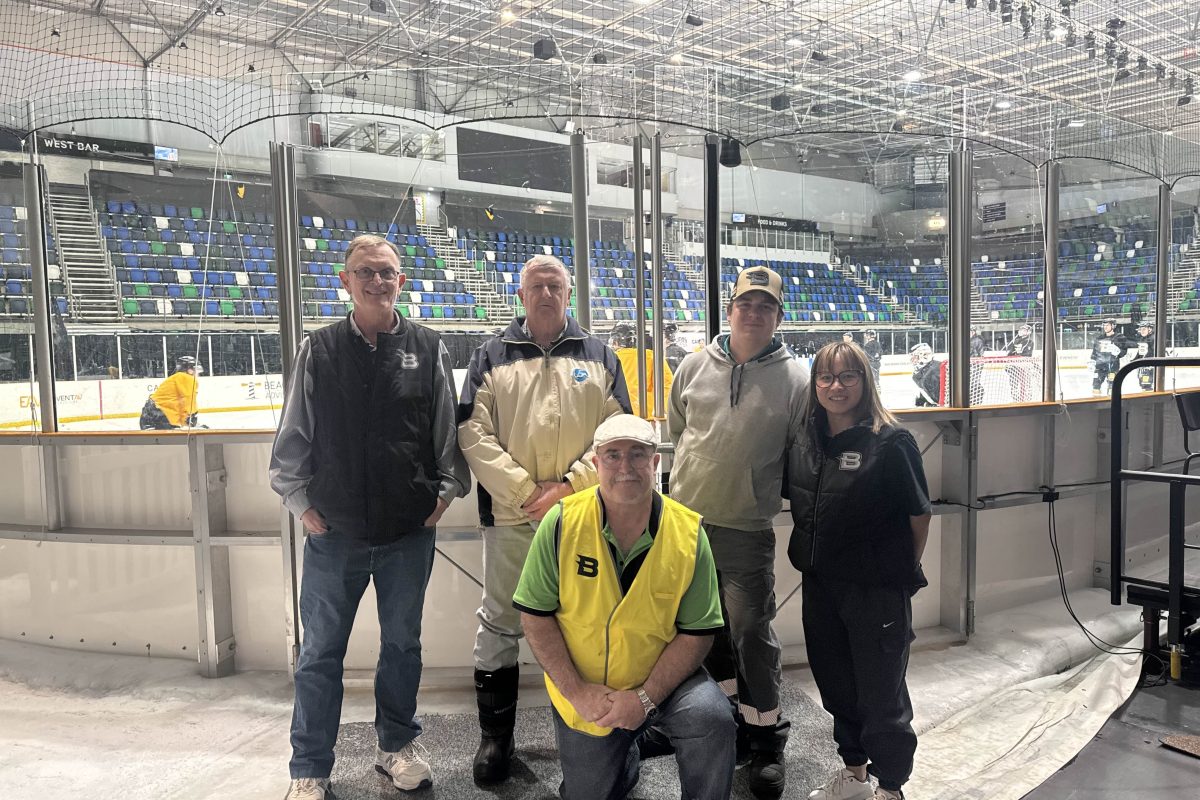
What began with Colin and Trevor handling much of the workload has now grown into a team of six volunteers.
The crew includes people who initially put their hands up without fully understanding what the role would involve. Several have since become so invested that they would rather work at ice level than use their tickets in the stands.
“They enjoy being here,” Colin said.
“It makes you part of the team.”
Part of the Brave
That sense of belonging is what continues to bring Colin and the Ice Tech crew back.
Their work often happens quietly and out of sight. For Colin, the reward comes when the puck drops.
“When they come out and you watch the first 10 minutes of the game, and they’re playing like they should, you know you’ve done a good job,” he said.
“They’re able to do that because you’ve done your job. You’re part of the team.”
Colin was already a dedicated Brave supporter before joining the crew. He also understood that Australian ice hockey could not survive without supporters willing to become volunteers.
“Hockey doesn’t exist in Australia without fans becoming volunteers,” he said.
“Every team is only as strong as its players and its support team, the volunteers, managers and game-day crew.”
For the Ice Tech team, that means putting in the extra hours, adapting to constant changes and doing everything possible to give the players the best surface on which to perform.
It is not only about driving the machine.
It is about understanding the ice beneath it, responding when something goes wrong and contributing to the professional game-day environment the Brave continue to build at the AIS Arena.
“Doing that little bit extra to make sure the boys can go onto the ice and do their best, that’s what we do it for,” Colin said.
For most supporters, the ice is simply where the game happens.
For Colin Beckinsale and his team, it is their contribution to the Brave.